
Categories
SEO Video Marketing

The Power of Video: Boosting Brand Awareness and SEO Ranking on YouTube

Hey there, fellow content creators and digital marketers! Today, we’re diving into the world of video marketing and how it can work wonders for your brand’s awareness and SEO ranking, particularly when you harness the mighty power of YouTube.

In the ever-evolving landscape of digital marketing, staying ahead of the curve is essential. Video content has become an integral part of any successful marketing strategy, and YouTube is the undisputed king of the video-sharing platforms. Let’s explore how creating and optimizing videos on YouTube can benefit your brand.

Brand Awareness Boost

  1. Visual Storytelling: Videos are an incredibly engaging medium for storytelling. They allow you to convey your brand’s message, values, and personality effectively. Whether it’s through product demos, behind-the-scenes footage, or customer testimonials, videos help your audience connect with your brand on a deeper level.
  2. Audience Reach: YouTube has a staggering 2 billion logged-in monthly users. That’s an enormous potential audience waiting to discover your content. Creating engaging videos allows you to tap into this vast user base and expose your brand to a broader audience.
  3. Shareability: One of the best things about YouTube is that it encourages sharing. Users often share videos they find interesting or entertaining, which can lead to a viral effect. This organic sharing can help your brand reach an even wider audience.
  4. Global Reach: YouTube is a global platform, which means your content can reach audiences worldwide. If you have a product or service with international appeal, YouTube provides a fantastic platform to showcase it to a diverse and global audience.

SEO Ranking Advantages

  1. Google Love: Did you know that Google owns YouTube? This is a significant advantage when it comes to SEO. Google often ranks YouTube videos in its search results, giving your brand additional visibility and a higher chance of being discovered.
  2. Keyword Optimization: Just like traditional SEO, YouTube SEO relies on keywords. By conducting keyword research and optimizing your video titles, descriptions, and tags, you can improve your video’s search visibility. Use relevant keywords that your target audience is likely to search for.
  3. Backlinks and Embeds: When your YouTube videos are embedded on other websites or shared on social media, they create valuable backlinks to your channel. This helps improve your website’s SEO ranking and overall online authority.
  4. Watch Time: YouTube’s algorithm rewards videos with higher watch times. By creating compelling, informative, and entertaining videos that keep viewers engaged, you can boost your channel’s watch time and improve its visibility on the platform.

Tips for Success

To make the most of your YouTube video marketing efforts, here are some essential tips:

  • Consistency is key. Publish videos regularly to keep your audience engaged.
  • Engage with your viewers by responding to comments and fostering a sense of community on your channel.
  • Collaborate with influencers and other YouTubers in your niche to expand your reach.
  • Analyze your video performance with YouTube Analytics to fine-tune your content strategy.

In conclusion, YouTube is a goldmine for brand awareness and SEO ranking. By creating high-quality, engaging videos and optimizing them for search, you can effectively promote your brand, connect with your audience, and boost your online presence. So, grab your camera, unleash your creativity, and start making videos that will take your brand to new heights! Happy filming!

Ready to start your video marketing journey visit video.exlabs.us

Categories
SEO

Understanding CTR: A Vital Element for SEO Success


Search Engine Optimization (SEO) is a dynamic field that requires a keen understanding of various metrics to ensure success. One such crucial metric is Click-Through Rate (CTR), which plays a pivotal role in the effectiveness of any SEO strategy. In this article, we’ll delve into what CTR is and why it’s essential for achieving SEO success.

What is CTR?

CTR, or Click-Through Rate, is a metric that measures the percentage of clicks a particular link receives compared to the total number of impressions it generates. In simpler terms, it indicates the percentage of people who clicked on a search result, ad, or link after seeing it.

Importance of CTR in SEO:

  1. Search Engine Rankings:
  • High CTR is often associated with higher search engine rankings. When users consistently click on your content in search results, search engines interpret it as a signal of relevance and quality, thus boosting your rankings.
  1. User Engagement:
  • CTR reflects user engagement. A higher CTR indicates that your content is resonating with your target audience, providing valuable information, and meeting their expectations. Google and other search engines prioritize user satisfaction, making engagement metrics like CTR crucial for SEO success.
  1. Traffic Quality:
  • CTR is a key indicator of the quality of traffic your website is attracting. A well-optimized title and meta description that encourage clicks are more likely to attract users genuinely interested in your content. This results in higher conversion rates and improved user satisfaction.
  1. Keyword Relevance:
  • Monitoring CTR helps identify whether your chosen keywords are resonating with your audience. If the CTR for specific keywords is low, it may indicate that your content is not aligning with user expectations or that the chosen keywords need adjustment.
  1. Ad Performance:
  • In the context of paid advertising, CTR is a crucial metric for measuring the success of your ad campaigns. A high CTR often correlates with effective ad copy and relevance to the target audience, resulting in better ad performance.

Tips for Improving CTR:

  1. Compelling Titles and Meta Descriptions:
  • Craft engaging and relevant titles and meta descriptions that encourage users to click. Highlight the value and uniqueness of your content.
  1. Optimize for Featured Snippets:
  • Aim for featured snippets, as they often result in higher CTR. Structure your content to answer common user queries and provide concise, valuable information.
  1. Mobile Optimization:
  • Ensure your website is mobile-friendly. With an increasing number of users accessing content on mobile devices, a mobile-optimized site contributes to a better user experience and potentially higher CTR.
  1. A/B Testing:
  • Experiment with different headlines, meta descriptions, and content formats to identify what resonates best with your audience. Regularly perform A/B testing to refine your approach.

Conclusion

Understanding and optimizing for CTR is integral to a successful SEO strategy. By focusing on user engagement, relevance, and quality, you not only improve your search engine rankings but also enhance the overall experience for your audience. Keep a close eye on your CTR metrics, adapt your strategy based on performance, and watch as your website climbs the ranks in search engine results.

Categories
SEO Trends

Navigating the Ever-Evolving SEO Landscape: Challenges for Small to Medium-Sized Businesses

In the fast-paced world of digital marketing, search engine optimization (SEO) remains a cornerstone for online success. However, SEO is not a static field; it continually evolves with advancements in technology and changes in user behavior. As we venture into the latest trends shaping the SEO landscape, small to medium-sized businesses (SMBs) are finding themselves at a crucial crossroads. In this blog, we’ll delve into the emerging SEO trends and the challenges faced by SMBs in adapting to these dynamic shifts.

  1. Mobile-First Indexing and User Experience

The mobile-first indexing trend has been on the rise since Google’s emphasis on providing users with a seamless mobile experience. With mobile searches now surpassing desktop searches, search engines prioritize mobile-optimized websites in their rankings. This shift poses a significant challenge for SMBs, especially those with outdated or non-responsive websites. Implementing responsive designs and optimizing the mobile user experience is essential for staying competitive in the digital space.

  1. Voice Search and Conversational SEO

The growing adoption of voice assistants like Siri, Alexa, and Google Assistant has altered how users interact with search engines. Voice search relies on conversational queries, and businesses must adapt their SEO strategies accordingly. SMBs face the challenge of optimizing their content for voice search by incorporating long-tail keywords, natural language, and contextually relevant information. Failure to do so can result in diminished search visibility and missed opportunities to engage with potential customers.

  1. E-A-T: Expertise, Authoritativeness, and Trustworthiness

In an effort to provide users with reliable information, search engines have become more stringent in assessing a website’s expertise, authoritativeness, and trustworthiness (E-A-T). SMBs often struggle to demonstrate their authority and expertise, especially when competing against larger, established brands. Building a strong online reputation, publishing high-quality content, and earning backlinks from reputable sources are essential steps in overcoming this challenge.

  1. Content Quality and User Intent

While content has always been a crucial aspect of SEO, its quality and relevance have become paramount. Search engines are getting better at understanding user intent, and SMBs must create content that directly addresses their audience’s needs and pain points. This requires a deep understanding of the target audience and the ability to craft content that goes beyond keyword stuffing. Producing valuable, informative, and engaging content will enhance a business’s chances of ranking higher in search results.

  1. Local SEO and Google My Business

For SMBs that rely on local customers, optimizing for local searches is vital. Google’s local algorithm updates and the prominence of Google My Business listings have made local SEO a powerful tool for brick-and-mortar businesses. However, maintaining accurate and consistent business information across various platforms can be challenging for SMBs with limited resources. Implementing local SEO best practices and actively managing Google My Business profiles is essential to attracting local customers.

  1. The Rise of Video and Visual Search

Visual content, including videos and images, is becoming increasingly prevalent in online searches. Video SEO and visual search optimization present new opportunities for businesses to capture user attention. However, creating high-quality videos and optimizing visual content for search engines can be resource-intensive for SMBs. Investing in video production and image optimization tools is crucial for leveraging the potential of visual search.

Conclusion

As SEO trends continue to evolve, small to medium-sized businesses must be proactive in adapting to the changing landscape. Embracing mobile-first design, optimizing for voice search, establishing expertise and trust, creating valuable content, focusing on local SEO, and incorporating visual elements are essential for staying relevant in the competitive digital world.

While these challenges may seem daunting, they also present unique opportunities for SMBs to outshine larger competitors. By leveraging the power of creativity, innovation, and a thorough understanding of their target audience, small to medium-sized businesses can not only survive but thrive in the dynamic and ever-evolving SEO landscape.

Categories
Uncategorized

How screen resolution can effect your business?

Imagine you spend thousands on building a website to launch an online store, digital marketing presence or all of the above. Now imagine your target audience is missing a piece of information or functionality because they don’t see it.

Responsive design. Perhaps you’ve heard of it, perhaps you haven’t. So here’s a quick definition:

Responsive web design (RWD) is a web development approach that creates dynamic changes to the appearance of a website, depending on the screen size and orientation of the device being used to view it.

Categories
Google Updates SEO

Google Replaces Title Tags With Site Names For Homepage Results

Google appears to have stopped showing title tags for mobile search results for the entire website such as in searches for the name of a website which generally show the home page.

This feature does not work for subdomains.

According to Google’s Search Central documentation for site names:

“Currently, Google Search supports site names from homepages at the domain-level, and not at the subdomain (for example, https://news.example.com) and or subdirectory (for example, https://example.com/news) level.”

What’s being shown in mobile searches is just the generic name for a website.

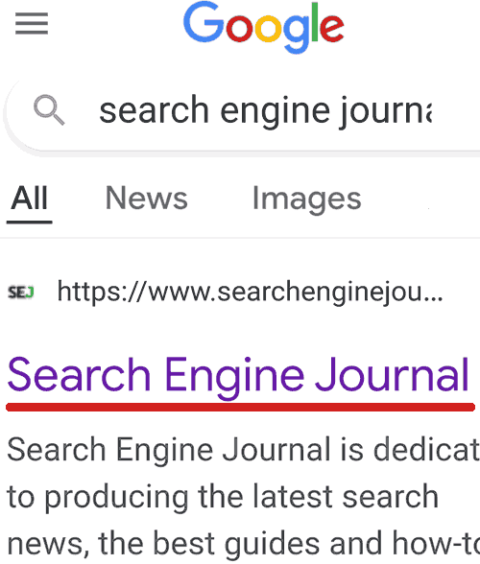
For example, a mobile search for Search Engine Journal shows a search engine results page (SERP) with the generic name of the website, Search Engine Journal.

Search result for keywords Search Engine Journal.

The title tag for the above home page is:

<title>Search Engine Journal - SEO, Search Marketing News and Tutorials</title>

Non-branded searches for keywords appear to still show the title tags.

Brand name + keyword searches also appear to still show the title tags.

Why Is Google Using Site Names?

Google is using site names in order to make it easier for users to identify the specific website in the search results.

Google’s official announcement explained:

“Today, Search is introducing site names on mobile search results to make it easier to identify the website that’s associated with each result…”

This new feature is available in the English, French, Japanese, and German languages and will begin showing up in other languages over the next few months.

New Feature Doesn’t Always Work

A search for a compound word domain name like “Search Engine Journal” and “searchenginejournal” return the same search results that featured the new site names as the title link.

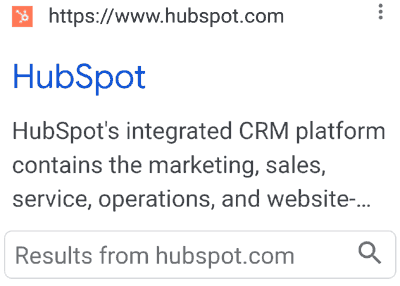
But a search using the compound word domain name HubSpot shows the old version search result with the title tags.

Search Result for Keyword Phrase “HubSpot”

Google Replaces Title Tags With Site Names For Homepage Results

But a search for Hub Spot (with a space between the two words) does work and shows the site name.

Boost Your Content with Keyword Intent Analysis
With Semrush’s keyword intent metric, it’s never been easier to quickly align your keywords with the right audience and the right content.

Try It Free

Advertisement

Search Result for Keyword Phrase: “Hub Spot”

Google Replaces Title Tags With Site Names For Homepage Results

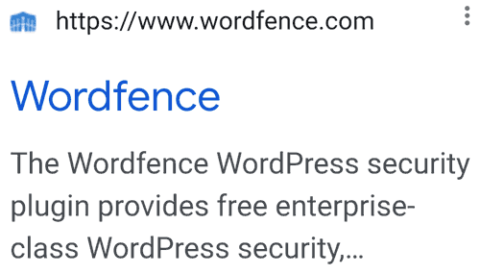
A search for compound word name “Wordfence” and “word fence” returns the same site name search.

Search Result for keywords “Wordfence” & “Word Fence”

Search result for keyword phrase "Wordfence"

So it appears that Google isn’t consistently returning site name results for HubSpot but is doing it correctly for many other sites.

Structured Data for New Site Names Feature

Google is recommending the use of the WebSite structured data type.

Previously the WebSite structured data site was considered pointless because obviously Google knows a website is a website and it didn’t need structured data to understand that Google was indexing a website.

But that’s changed because Google is now using the WebSite structured data type, specifically the “name” property, to understand what the site name of a website is.

Google published an example of the WebSite structured data with the “name” property in use:

<title>Example: A Site about Examples</title>
<script type="application/ld+json">
{
"@context" : "http://schema.org",
"@type" : "WebSite",
"name" : "Example",
"url" : "https://example.com/"
}
</script>

The above structured data must be shown on the home page.

Google’s Search Central page for site name recommends the following for placement of the WebSite structured data:

“The WebSite structured data must be on the homepage of the site.

By homepage, we mean the domain-level root URI.

For example, https://example.com is the homepage of the domain, while https://example.com/de/index.html isn’t the homepage.”

What if a Site Has an Alternate Name?

What’s useful about the WebSite structured data is that it offers the opportunity to tell Google what the alternate name of the website is.

Google explains how to do it:

“If you want to provide an alternate version of your site name (for example, an acronym or shorter name), you can do this by adding the alternateName property.

This is optional.”

The structured data for adding an optional name looks like this:

JSON Structured Data for Optional Name

<script type="application/ld+json">
{
"@context" : "http://schema.org",
"@type" : "WebSite",
"name" : "Example Company",
"alternateName" : "EC",
"url" : "https://example.com/"
}
</script>

Google Uses More Than Structured Data

The Google documentation on site names explains that Google is using on-page, off-page and meta data information in addition to structured data to determine what a webpage site name is.

This is what Google uses to understand the site name:

  1. WebSite structured data
  2. Title tag
  3. Headings (H1, H2, etc.)
  4. Open Graph Protocol meta data, specifically the og:site_name

Something to take note of is that og:site_name property is an optional but recommended Open Graph property.

The Open Graph notation generally looks like this in the HTML code:

<meta property="og:site_name" content="Example Name of Site" />

Google Site Names

The new site names feature in Google search looks attractive on mobile devices.

It makes sense to have less clutter in the SERPs for home page brand name searches. although I can see some complaining about the absence of title tag influence in these kinds of searches.


Citations

Read the Official Announcement

Introducing site names on Google Search

Read the Search Central Documentation

Provide a site name to Google Search

Featured image sourced by photo.exmedia.co