Hey there, fellow content creators and digital marketers! Today, we’re diving into the world of video marketing and how it can work wonders for your brand’s awareness and SEO ranking, particularly when you harness the mighty power of YouTube.
In the ever-evolving landscape of digital marketing, staying ahead of the curve is essential. Video content has become an integral part of any successful marketing strategy, and YouTube is the undisputed king of the video-sharing platforms. Let’s explore how creating and optimizing videos on YouTube can benefit your brand.
Brand Awareness Boost
Visual Storytelling: Videos are an incredibly engaging medium for storytelling. They allow you to convey your brand’s message, values, and personality effectively. Whether it’s through product demos, behind-the-scenes footage, or customer testimonials, videos help your audience connect with your brand on a deeper level.
Audience Reach: YouTube has a staggering 2 billion logged-in monthly users. That’s an enormous potential audience waiting to discover your content. Creating engaging videos allows you to tap into this vast user base and expose your brand to a broader audience.
Shareability: One of the best things about YouTube is that it encourages sharing. Users often share videos they find interesting or entertaining, which can lead to a viral effect. This organic sharing can help your brand reach an even wider audience.
Global Reach: YouTube is a global platform, which means your content can reach audiences worldwide. If you have a product or service with international appeal, YouTube provides a fantastic platform to showcase it to a diverse and global audience.
SEO Ranking Advantages
Google Love: Did you know that Google owns YouTube? This is a significant advantage when it comes to SEO. Google often ranks YouTube videos in its search results, giving your brand additional visibility and a higher chance of being discovered.
Keyword Optimization: Just like traditional SEO, YouTube SEO relies on keywords. By conducting keyword research and optimizing your video titles, descriptions, and tags, you can improve your video’s search visibility. Use relevant keywords that your target audience is likely to search for.
Backlinks and Embeds: When your YouTube videos are embedded on other websites or shared on social media, they create valuable backlinks to your channel. This helps improve your website’s SEO ranking and overall online authority.
Watch Time: YouTube’s algorithm rewards videos with higher watch times. By creating compelling, informative, and entertaining videos that keep viewers engaged, you can boost your channel’s watch time and improve its visibility on the platform.
Tips for Success
To make the most of your YouTube video marketing efforts, here are some essential tips:
Consistency is key. Publish videos regularly to keep your audience engaged.
Engage with your viewers by responding to comments and fostering a sense of community on your channel.
Collaborate with influencers and other YouTubers in your niche to expand your reach.
Analyze your video performance with YouTube Analytics to fine-tune your content strategy.
In conclusion, YouTube is a goldmine for brand awareness and SEO ranking. By creating high-quality, engaging videos and optimizing them for search, you can effectively promote your brand, connect with your audience, and boost your online presence. So, grab your camera, unleash your creativity, and start making videos that will take your brand to new heights! Happy filming!
Search Engine Optimization (SEO) is a dynamic field that requires a keen understanding of various metrics to ensure success. One such crucial metric is Click-Through Rate (CTR), which plays a pivotal role in the effectiveness of any SEO strategy. In this article, we’ll delve into what CTR is and why it’s essential for achieving SEO success.
What is CTR?
CTR, or Click-Through Rate, is a metric that measures the percentage of clicks a particular link receives compared to the total number of impressions it generates. In simpler terms, it indicates the percentage of people who clicked on a search result, ad, or link after seeing it.
Importance of CTR in SEO:
Search Engine Rankings:
High CTR is often associated with higher search engine rankings. When users consistently click on your content in search results, search engines interpret it as a signal of relevance and quality, thus boosting your rankings.
User Engagement:
CTR reflects user engagement. A higher CTR indicates that your content is resonating with your target audience, providing valuable information, and meeting their expectations. Google and other search engines prioritize user satisfaction, making engagement metrics like CTR crucial for SEO success.
Traffic Quality:
CTR is a key indicator of the quality of traffic your website is attracting. A well-optimized title and meta description that encourage clicks are more likely to attract users genuinely interested in your content. This results in higher conversion rates and improved user satisfaction.
Keyword Relevance:
Monitoring CTR helps identify whether your chosen keywords are resonating with your audience. If the CTR for specific keywords is low, it may indicate that your content is not aligning with user expectations or that the chosen keywords need adjustment.
Ad Performance:
In the context of paid advertising, CTR is a crucial metric for measuring the success of your ad campaigns. A high CTR often correlates with effective ad copy and relevance to the target audience, resulting in better ad performance.
Tips for Improving CTR:
Compelling Titles and Meta Descriptions:
Craft engaging and relevant titles and meta descriptions that encourage users to click. Highlight the value and uniqueness of your content.
Optimize for Featured Snippets:
Aim for featured snippets, as they often result in higher CTR. Structure your content to answer common user queries and provide concise, valuable information.
Mobile Optimization:
Ensure your website is mobile-friendly. With an increasing number of users accessing content on mobile devices, a mobile-optimized site contributes to a better user experience and potentially higher CTR.
A/B Testing:
Experiment with different headlines, meta descriptions, and content formats to identify what resonates best with your audience. Regularly perform A/B testing to refine your approach.
Conclusion
Understanding and optimizing for CTR is integral to a successful SEO strategy. By focusing on user engagement, relevance, and quality, you not only improve your search engine rankings but also enhance the overall experience for your audience. Keep a close eye on your CTR metrics, adapt your strategy based on performance, and watch as your website climbs the ranks in search engine results.
In the fast-paced world of digital marketing, search engine optimization (SEO) remains a cornerstone for online success. However, SEO is not a static field; it continually evolves with advancements in technology and changes in user behavior. As we venture into the latest trends shaping the SEO landscape, small to medium-sized businesses (SMBs) are finding themselves at a crucial crossroads. In this blog, we’ll delve into the emerging SEO trends and the challenges faced by SMBs in adapting to these dynamic shifts.
Mobile-First Indexing and User Experience
The mobile-first indexing trend has been on the rise since Google’s emphasis on providing users with a seamless mobile experience. With mobile searches now surpassing desktop searches, search engines prioritize mobile-optimized websites in their rankings. This shift poses a significant challenge for SMBs, especially those with outdated or non-responsive websites. Implementing responsive designs and optimizing the mobile user experience is essential for staying competitive in the digital space.
Voice Search and Conversational SEO
The growing adoption of voice assistants like Siri, Alexa, and Google Assistant has altered how users interact with search engines. Voice search relies on conversational queries, and businesses must adapt their SEO strategies accordingly. SMBs face the challenge of optimizing their content for voice search by incorporating long-tail keywords, natural language, and contextually relevant information. Failure to do so can result in diminished search visibility and missed opportunities to engage with potential customers.
E-A-T: Expertise, Authoritativeness, and Trustworthiness
In an effort to provide users with reliable information, search engines have become more stringent in assessing a website’s expertise, authoritativeness, and trustworthiness (E-A-T). SMBs often struggle to demonstrate their authority and expertise, especially when competing against larger, established brands. Building a strong online reputation, publishing high-quality content, and earning backlinks from reputable sources are essential steps in overcoming this challenge.
Content Quality and User Intent
While content has always been a crucial aspect of SEO, its quality and relevance have become paramount. Search engines are getting better at understanding user intent, and SMBs must create content that directly addresses their audience’s needs and pain points. This requires a deep understanding of the target audience and the ability to craft content that goes beyond keyword stuffing. Producing valuable, informative, and engaging content will enhance a business’s chances of ranking higher in search results.
Local SEO and Google My Business
For SMBs that rely on local customers, optimizing for local searches is vital. Google’s local algorithm updates and the prominence of Google My Business listings have made local SEO a powerful tool for brick-and-mortar businesses. However, maintaining accurate and consistent business information across various platforms can be challenging for SMBs with limited resources. Implementing local SEO best practices and actively managing Google My Business profiles is essential to attracting local customers.
The Rise of Video and Visual Search
Visual content, including videos and images, is becoming increasingly prevalent in online searches. Video SEO and visual search optimization present new opportunities for businesses to capture user attention. However, creating high-quality videos and optimizing visual content for search engines can be resource-intensive for SMBs. Investing in video production and image optimization tools is crucial for leveraging the potential of visual search.
Conclusion
As SEO trends continue to evolve, small to medium-sized businesses must be proactive in adapting to the changing landscape. Embracing mobile-first design, optimizing for voice search, establishing expertise and trust, creating valuable content, focusing on local SEO, and incorporating visual elements are essential for staying relevant in the competitive digital world.
While these challenges may seem daunting, they also present unique opportunities for SMBs to outshine larger competitors. By leveraging the power of creativity, innovation, and a thorough understanding of their target audience, small to medium-sized businesses can not only survive but thrive in the dynamic and ever-evolving SEO landscape.
Local SEO is a search engine optimization (SEO) strategy that helps your business become more visible in local search results on Google. Whether you’re a restaurant, hair salon, or any other type of brick-and-mortar business that serves a geographic area, optimizing for local SEO can make all the difference when it comes to increasing online visibility and driving customers to your door.
To understand SEO, it’s helpful to first get a grasp of how Google ranks search results.
How Does Google Rank Search Results?
Google has become synonymous with search, and with good reason. Google handles billions of searches each day, and the vast majority of those searches lead to clicks on one of the first few results. With so much at stake, it’s important to understand how Google ranks search results.
Google’s ranking systems are based on numerous factors. One of the most important is relevance. Google wants to provide users with the most relevant results possible, so it looks for websites that contain the keywords the user is searching for, and that are related to the topic of the search.
Another important factor is prominence. Google wants to show users the most authoritative and trustworthy websites, so it looks for sites that are well-established, have high traffic, and have a good reputation in their industry.
Finally, Google also considers link popularity. Google assumes that if a lot of other websites are linking to a particular website, that website must be a valuable resource. So Google gives higher rankings to sites that have a lot of inbound links.
All of these factors work together to determine the rankings of search results. Google’s algorithm is constantly evolving, so it’s important to stay up-to-date on the latest trends and best practices in SEO.
Local SEO is a slightly different animal. When someone searches for a local keyword, like “pizza delivery,” for example, Google takes into account the searcher’s location and returns results that are nearby. This is why you’ll get different results if you search for “pizza delivery near me” at home, versus at a friend’s house, or at work.
For local businesses, optimizing for local search is essential for attracting nearby customers. With the right SEO strategy, you can help your website climb the ranks and attract more traffic and business.
What is Local SEO?
Local search engine optimization is a branch of SEO that focuses on optimizing a website to be found in local search results. Content, on-page optimizations, and link building are part of these efforts, all with a focused, localized intent.
Why is Local SEO important?
Optimizing for local search is important, especially for brick-and-mortar businesses serving specific towns, cities, regions, and even states. When done right, local SEO allows people to find information about your business quickly and easily, putting them one step closer to a transaction.
What is Local SEO Content?
To move up the ranks in local SEO search results and compete with zero-click results, you need rich local content. However, it’s more than simply matching local-based keywords to your blog content.
Local SEO content consists of written content, images, and even video designed to meet the needs of local searchers. It can appear on your website, on local landing pages, on your Google Business Profile, and more. If you’re a local business targeting a specific area or zip code, all the content on your website is aimed at local residents.
Let’s be clear – there is no local SEO content magic spell that will instantly drive local foot traffic to your business. (If only.)
The difference between “content” and “local content” is the search intent behind the query.
When developing content, take into account local consumers, local entities, and local semantic relationships to create a deeper connection.
SEO is a word you’ve likely heard a lot of if you’re a business owner or marketer. You know that you need it – and you want to understand it – but finding a simple black-and-white definition of SEO is difficult.
On any given day, people conduct more than 8.5 billion searches on Google. Therefore, showing up on the front page of Google can be the deciding factor between a brand that’s thriving and one that’s, well, failing. If your website, product, or blog post is on any other page of Google’s search results than the first, then it’s the equivalent of it not ranking at all.
After all, if you ever need to hide a dead body, just place it on the second page of Google’s search results – where no one will ever go to look for it.
But let’s get back to the point. What does SEO even mean?
You probably know that it stands for search engine optimization, but what do you need to optimize?
It seems pretty straightforward.
You pick a few keywords, add them to your website, and behold! Your site is optimized for search engines, right? Not exactly.
SEO involves writing, design, links, site performance, and much more.
Many people understand the basic principles of SEO, but it’s constantly evolving. The SEO that we know and love is not the same SEO that we knew 10 years ago, or even a year ago, for that matter. And that’s why SEO is something that needs to be continually defined and redefined.
Here’s a brief explanation of SEO in under 100 words to get you started:
What is SEO?
SEO stands for search engine optimization. It refers to the complex process that helps your website rank higher organically in search engine results pages (SERPs). This process makes your website more visible to people who are looking for solutions that your brand, product, or service can provide via search engines like Google. The techniques used to improve search engine rankings are constantly evolving as a direct result of the search algorithms that companies like Google are constantly changing.
Generally, you’ll see results of SEO efforts once the page has been crawled and indexed by a search engine. There are a ton of ways to improve the SEO of your site pages, though. Search engines also look for elements, including title tags, keywords, image tags, internal link structure, and inbound links (also known as backlinks). And that’s just to name a few. Search engines also look at site structure and design, visitor behavior, and other external, off-site factors to determine how highly ranked your site should be in their SERPs.
As mentioned above, Google’s algorithms are constantly changing. Unless you’re like us––marketing/dev nerds who keep on top of every single announcement made at Google––it’s incredibly easy to get confused about what update or algorithm does what. A new guide to Google Search ranking systems will keep you informed about which systems Google uses to rank search results and which are retired.
What is an SEO Strategy?
An SEO strategy is a comprehensive plan to get more visitors to your website organically through search engines. Successful SEO campaigns include on-page strategies, which use intent-based keywords, and off-page strategies, which earn inbound links from other websites.
When it comes to the written content on your website, including content on site pages and blog posts, you’ll probably be thinking about how you can incorporate certain keywords before you begin writing. While this is a good thing to keep in mind, it shouldn’t be your primary focus. Creating obnoxiously spammy blog posts full of keywords may have worked ten years ago, but now, it will get your page flagged and will hurt your SEO rather than help it. Whenever you create content, your focus should be on the intent of your audience, not how many times you can include a keyword in your content.
To satisfy intent and rank well in the long term, build your SEO strategy around topics, not keywords. If you do that, you’ll find you can naturally optimize for important keywords, anyway, without worrying about coming off as spammy.
The bottom line: The key to attracting relevant visitors to your website through search engines is understanding your target audience and what interests them.
We’ll touch back on SEO strategy in a minute, but first, let’s take a look at search.
How Does Search Work?
Now that you have an idea of the basics of SEO, let’s take a quick look at some core search engine components.
What are search engines? In short, they are answer machines.
They exist to discover, understand, and organize the internet’s content to offer the most relevant results to the questions searchers are asking. In order to show up in search results, your content needs to first be visible to search engines. It’s arguably the most important piece of the SEO puzzle: If your site can’t be found, there’s no way you’ll ever show up in the SERPs. Search engines have three primary functions:
Crawl: Scour the Internet for content, looking over the code/content for each URL they find.
Index: Store and organize the content found during the crawling process. Once a page is in the index, it’s in the running to be displayed as a result of relevant queries.
Rank: Provide the pieces of content that will best answer a searcher’s query, which means that results are ordered from most relevant to least relevant.
To determine relevance, search engines use algorithms, a process or formula by which stored information is retrieved and ordered in meaningful ways. These algorithms have gone through many changes over the years in order to improve the quality of search results. Google, for example, makes algorithm adjustments every day — some of these updates are minor quality tweaks, whereas others are core/broad algorithm updates deployed to tackle a specific issue, for example, an update to tackle link spam.
Why does Google change its algorithm so often? While Google doesn’t always reveal specifics as to why they do what they do, we do know that Google’s aim when making algorithm adjustments is to improve overall search quality. That’s why, in response to algorithm update questions, Google will answer with something along the lines of: “We’re making quality updates all the time.” So, if your site suffered after an algorithm adjustment, compare it against Google’s Quality Guidelines or Search Quality Rater Guidelines, both are very telling in terms of what search engines want.
By having an effective SEO strategy and staying up-to-date with these algorithm updates, you’ll be able to give Google what it’s looking for, and in turn, you’ll improve your website’s chances of ranking higher in the SERPS.
The SEO Force: Black Hat VS White Hat SEO Strategies
As with any other industry, you’ll come across many different opinions about the most effective strategies. And, like most ventures, some people get into SEO to make a quick buck while others are in it for the long haul.
It’s helpful to visualize The Force in the Star Wars universe when considering an SEO strategy.
If you want to work SEO like a get-rich-quick scheme, you’ll probably end up doing black hat SEO.
This type of SEO lies on The Dark Side of the SEO Force. Black hat SEO focuses on optimizing your content only for the search engine, not considering humans at all. Since there are lots of ways to bend and break the rules to get your sites to rank high, these are a prime way for black hat SEOs to make a few thousand dollars fast. Ultimately, this approach results in spammy, crappy pages that often get banned very fast. This kind of approach will often lead to severe punishment for the marketer, ruining their chance of building something sustainable in the future. So, you might make some fast money this way, but you’ll continuously have to be on the lookout for search engine updates and come up with new ways to dodge the rules. In the end, this method is not sustainable.
On the other hand, white hat SEO lies on The Light Side of the SEO Force. If you do SEO this way, you’ll focus on your human audience. You’ll try to give them the best content possible and make it easily accessible to them by playing according to the search engine’s rules. It’s the way to build a sustainable online business.
While it’s important to understand the difference between the two methods, from here on out, you’ll only hear us discuss white hat SEO.
Now, the choice is up to you:
Choose your side of The SEO Force wisely, young Padawan!
Image Description: Obi-Wan Kenobi wields his blue lightsaber and prepares for a duel with Darth Vader (and his red lightsaber).
Unfortunately, it’s not always that easy. As you know, life’s not always black or white.
The same holds true for SEO. Gray hat SEO, like its name implies, is a little white and a little black. Gray hat SEO is a little riskier than white hat and while it’s not as malicious as black hat strategies, it can still get your site banned and ruin your reputation as an SEO marketer.
The reality of SEO is that The Dark Side of things, you know, like Sith mind tricks (or spamdexing) and Force choking (whoops, I meant keyword spamming), just aren’t good enough for getting a good rank on search engines anymore.
You’re going to have to put in the work to make your website one that people want to visit. If you do so ethically, you can ensure that the time and effort you spent on improving your site will be rewarded by long-lasting results. Otherwise, you risk being penalized by Google or, worse, getting banned from search engines altogether.
Image Description: Master Yoda stands wisely among a sea of stars. There is text overlayed on the image that reads: “DO OR DO NOT, THERE IS NO TRY.”
Google appears to have stopped showing title tags for mobile search results for the entire website such as in searches for the name of a website which generally show the home page.
This feature does not work for subdomains.
According to Google’s Search Central documentation for site names:
“Currently, Google Search supports site names from homepages at the domain-level, and not at the subdomain (for example, https://news.example.com) and or subdirectory (for example, https://example.com/news) level.”
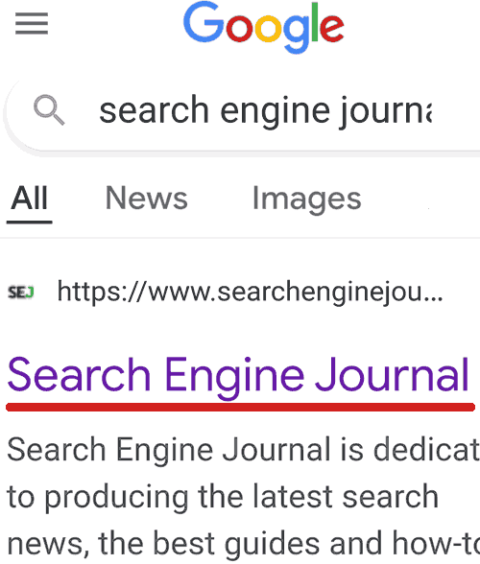
What’s being shown in mobile searches is just the generic name for a website.
For example, a mobile search for Search Engine Journal shows a search engine results page (SERP) with the generic name of the website, Search Engine Journal.
The title tag for the above home page is:
<title>Search Engine Journal - SEO, Search Marketing News and Tutorials</title>
Non-branded searches for keywords appear to still show the title tags.
Brand name + keyword searches also appear to still show the title tags.
Why Is Google Using Site Names?
Google is using site names in order to make it easier for users to identify the specific website in the search results.
Google’s official announcement explained:
“Today, Search is introducing site names on mobile search results to make it easier to identify the website that’s associated with each result…”
This new feature is available in the English, French, Japanese, and German languages and will begin showing up in other languages over the next few months.
New Feature Doesn’t Always Work
A search for a compound word domain name like “Search Engine Journal” and “searchenginejournal” return the same search results that featured the new site names as the title link.
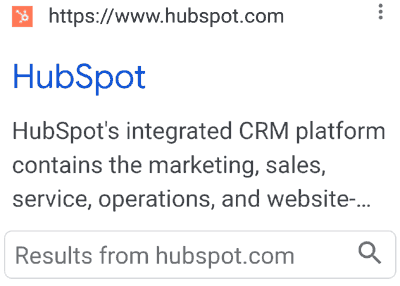
But a search using the compound word domain name HubSpot shows the old version search result with the title tags.
Search Result for Keyword Phrase “HubSpot”
But a search for Hub Spot (with a space between the two words) does work and shows the site name.
Boost Your Content with Keyword Intent Analysis With Semrush’s keyword intent metric, it’s never been easier to quickly align your keywords with the right audience and the right content.
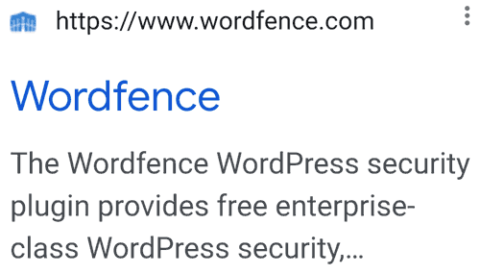
A search for compound word name “Wordfence” and “word fence” returns the same site name search.
Search Result for keywords “Wordfence” & “Word Fence”
So it appears that Google isn’t consistently returning site name results for HubSpot but is doing it correctly for many other sites.
Structured Data for New Site Names Feature
Google is recommending the use of the WebSite structured data type.
Previously the WebSite structured data site was considered pointless because obviously Google knows a website is a website and it didn’t need structured data to understand that Google was indexing a website.
But that’s changed because Google is now using the WebSite structured data type, specifically the “name” property, to understand what the site name of a website is.
Google published an example of the WebSite structured data with the “name” property in use:
<title>Example: A Site about Examples</title>
<script type="application/ld+json">
{
"@context" : "http://schema.org",
"@type" : "WebSite",
"name" : "Example",
"url" : "https://example.com/"
}
</script>
The above structured data must be shown on the home page.
Google’s Search Central page for site name recommends the following for placement of the WebSite structured data:
“The WebSite structured data must be on the homepage of the site.
By homepage, we mean the domain-level root URI.
For example, https://example.com is the homepage of the domain, while https://example.com/de/index.html isn’t the homepage.”
What if a Site Has an Alternate Name?
What’s useful about the WebSite structured data is that it offers the opportunity to tell Google what the alternate name of the website is.
Google explains how to do it:
“If you want to provide an alternate version of your site name (for example, an acronym or shorter name), you can do this by adding the alternateName property.
This is optional.”
The structured data for adding an optional name looks like this:
The Google documentation on site names explains that Google is using on-page, off-page and meta data information in addition to structured data to determine what a webpage site name is.
This is what Google uses to understand the site name:
WebSite structured data
Title tag
Headings (H1, H2, etc.)
Open Graph Protocol meta data, specifically the og:site_name
Something to take note of is that og:site_name property is an optional but recommended Open Graph property.
The Open Graph notation generally looks like this in the HTML code:
<meta property="og:site_name" content="Example Name of Site" />
Google Site Names
The new site names feature in Google search looks attractive on mobile devices.
It makes sense to have less clutter in the SERPs for home page brand name searches. although I can see some complaining about the absence of title tag influence in these kinds of searches.